Benefits of Flashcards
Today, I want to share something really helpful for young learners. Flashcards are very useful for young children who are learning Maths and English. I remember using it at age 2, when I was starting to learn about numbers and letter recognition. Subsequently, my flashcards were changed to 3-letter words, then 4-letter words, and so on.
By introducing flashcards at an early stage of development, they will get a head start in school and be more confident. Flashcards are great because they are easy to use and children like them. Flashcards are like friends that help children learn when they are just starting. They make learning fun. Children can use them to practise every day.
A child’s brain in early development is like a sponge that absorbs information rapidly. Using flashcards will help them to retain words and numbers in their head quickly. Flashcards make it easy for young learners to understand information by breaking it down into small pieces. This is essential for children who are unable to comprehend an overload of information in class.
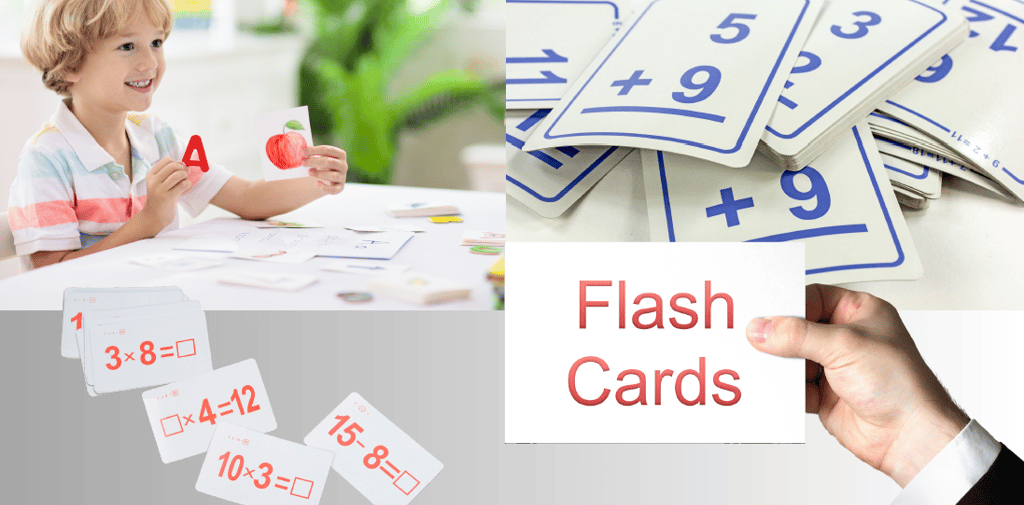
For example, one flashcard can have the number 5 on one side and five little stars on the other side. This really helps young learners connect the number 5 with five stars. Flashcards are great for Maths because they help young learners understand that numbers are linked to quantities. English flashcards are also very helpful. They can have a letter on one side and a picture on the other side. Flashcards can also have a word on one side and a picture on the other side. This helps young learners learn to read and write.
Young learners can use flashcards to learn things every day. When you see a letter and hear how it sounds, and then think of a picture that goes with it, you really start to get it. You can remember it better
The secret ingredient to flashcard learning is recalling and repetition. By practising flashcards a bit at a time and having fun, they can get really good at it without getting bored. Playing a game of "match the number" or "find the letter" is a great way to keep students excited. Students need to stay engaged while they learn.
As kids get older, you can add cards with bigger numbers, harder words or simple math problems to the deck. This means flashcards can grow as students progress through their primary school years. And, yes, even through high school. The thing about flashcards is that they can change as students get better at things and be replaced with more challenging cards. The cards can be used to sequence a story they have read, which improves comprehension skills. Why not have them draw on the cards and sequence them on an activity sheet? It will make it more fun and engaging!
As younger kids in the early years of primary school, it is best to keep the time you use flashcards to five to ten minutes because they have shorter attention spans. Subsequently, you can have more cards as they grow older.
If you are a parent, teacher, or carer, do not think that flashcards are not helpful. Flashcards can be handy for kids. They can be a part of a good education. It’s a tried-and-true way to nurture early Maths and English skills, build confidence, and create joyful learning moments at home or in the classroom.
Flashcards can come in any forms - physical cards, Kahoot or YouTube videos. I have made many flashcard videos on my OLC YouTube channel to help students reinforce their learning.
Flashcards have since been my saviour in high school. I could make my own flashcards, and it helped me remember the chunks of information we get in school. So, it is a valuable skill to learn throughout high school years.
Until then, happy learning and enjoy those little breakthroughs! After all, every small step counts on the exciting path of childhood development.