
Welcome to the OLC blog! I know you're wondering why I'm taking advice from a high school student on creating a positive learning culture at home. It's essential to check my perspective because I can share insights into my experience and how minor home improvements can benefit your primary schooler.
For children to thrive in school, you need to set the stage at home. A child’s attitude towards learning often starts at home. The home environment must be supportive, curious, and fun. In this way, children develop a positive mindset that encourages resilience and curiosity to learn more.
Learning at home need not be stressful. Give them time to make mistakes and take the opportunity to help them learn. Parents are the best mentors, as they pave the way for children's emotional intelligence, social well-being, and mental resilience.
For me, home has always been my sanctuary. I can communicate with family members, discuss ideas, and solve any problems I encounter at school. This trusting relationship is essential for children to thrive in school.
One of the most powerful tools I’ve found for teaching responsibility is surprisingly household chores. Whether it’s setting the table, sorting laundry, or feeding a pet, chores offer primary schoolers the opportunity to develop routines, take on accountability, and feel a sense of contribution. And here’s the thing: Chores build practical skills that are necessary for a child’s developmental stages. When you hand over a task, you’re saying, “I believe you can handle this,” which boosts a child’s confidence immensely.
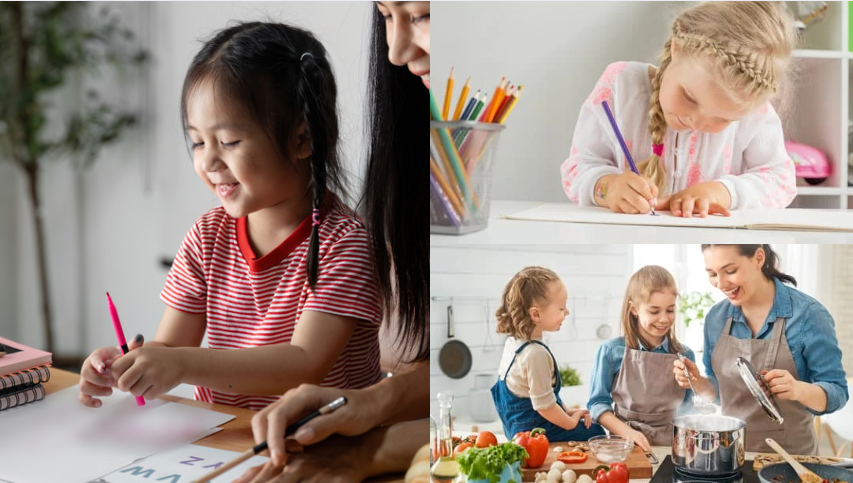
Some practical tips for a conducive learning environment include a dedicated learning corner in your home. Well, you don’t have to spend a considerable amount to set it up. All you need is a table and a chair, stationery supplies, notebooks, and even a rewards chart. It is their personal space for learning, free from distractions.
Another tried-and-tested way is to incorporate real-life activities into learning. Allow them to tackle the tasks with your guidance. This can include baking, gardening, and even grocery shopping. They are not only learning to take on responsibilities, but parents can also incorporate learning Maths, Sciences, and even English.
Another key thing to remember is that primary schoolers need guided routines. Parents can create a weekly flexible routine of events that include time for drawing, homework, learning school subjects, sports, or other activities that benefit their overall development.
Above all else, instilling a culture of respect at home is crucial. Respect shapes how children treat themselves and others by encouraging open conversations about kindness, empathy, and the fact that everyone is special in their own way. It definitely pays off when kids carry that respect into school and beyond.
As kids grow, especially as they move into upper primary and early secondary years, resilience becomes a game-changer. Learning isn’t always smooth, and setbacks can easily shake confidence. Teaching resilience means equipping them with skills to face challenges without fear.
My approach? Sharing stories of failure and recovery, reinforcing that mistakes are part of learning, and fostering problem-solving attitudes over perfectionism. One way is to encourage them to reflect on their mistakes and how they could have done better. In this way, you create a growth mindset that fosters persistence rather than giving up.
Looking back as a high schooler, I realise that my parents’ attitude towards learning and my overall social and emotional development made all the difference.
Thanks for reading my blog and for being part of this community where we celebrate growth, learning, and connection together.