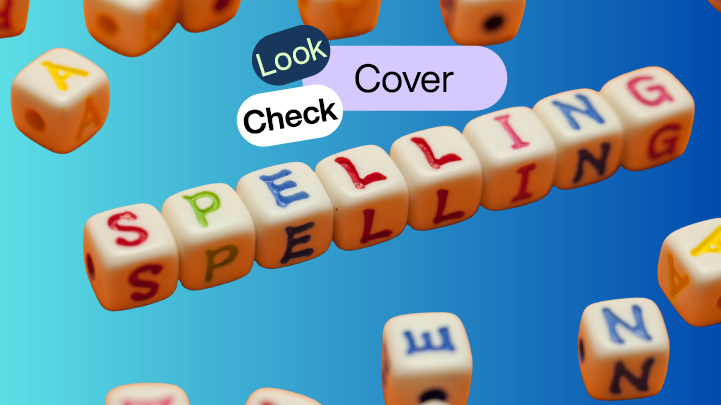
The 'Look Cover Check' Method to Improve Spelling
I want to share a technique that is really helping students in primary school. It is called the "Look, Cover, and Check" method for spelling. This method is excellent because it allows students who struggle with words or get stuck on spelling tests. Let us see why the "Look, Cover, and Check" method works well.
The "Look, Cover, and Check" method helps children feel more confident when they are spelling. This method is not about memorising words; it is more than that.
So what is "Look, Cover and Check?"
The idea behind "Look, Cover, and Check" is straightforward. It helps learners get familiar with words. First, a child looks closely at the word. They notice what the word looks like, the letters in it, and anything about it. Then they cover the word, as if they were hiding it or turning the page. They try to write the word from memory.
Finally, our little learners check whether they spelled the word correctly by looking at the word, using the "Look, Cover, and Check" method, and the word they just wrote.
It is simple. That is what makes language learning so effective for children. By copying words over and over again or trying to guess the word, children learn to correct their own spelling mistakes. Kids become spelling detectives, and this method of learning helps them improve their memory and attention to detail as they practice spelling.
The "Look, Cover, and Check" method builds on visual memory, which is very important for learners. They start to notice patterns, like which letters are usually together and how many repeated letters are in tricky words like the word ‘scissors’. They figure out how vowels and consonants work together in a word structure. It also helps them understand when spellings do not follow the rules. This method will help them support reading and writing skills as well.
Children do not always need adult help. They learn to check their work themselves, which is excellent for "Look, Cover, and Check." When children find their mistakes, they feel really proud of themselves because they corrected them on their own. It feels like a ‘teacher’ moment for them. This makes them feel good about what they can do on their own, which boosts their confidence.
Through "Look, Cover, and Check," learners write words from memory, which helps their brains in a way. This is how you get the memory you need to spell words. You need this memory when you are writing stories or taking tests. Writing words from memory is what helps you develop muscle memory for spelling words correctly.
We should be happy for our "Error Detectives". We need to tell kids that it is okay to make their mistakes. When kids find their mistakes, we should celebrate with them. Finding errors is like finding clues. This helps kids want to keep trying.
Make things more interesting with categories. You can group words by what they mean, by how they're spelled, or by how hard they are. This way, practice is fun. Kids will pay attention to the words.
The "Look, Cover, and Check" method is really good for children because it helps them learn how to focus and keep trying. When kids use this method, they get better at paying attention and not giving up. It helps children build skills like concentration and patience. Children learn to persevere when they keep working on a word until they get it right. This is a way for kids to learn because it teaches them to be strong and keep going even when things are hard.
When you see a child having trouble with spelling, tell them to try "Look, Cover, and Check." It can make spelling a lot more fun for kids. They will start to feel good at spelling and be proud of themselves. The child will see that they are getting better at it. Learning is fun for kids when they can see that they are making progress with their spelling.
Try the "Look, Cover, and Check" method. From my experience in primary school as a top speller, it did me good, and I am sure that it will help your child too!
Until then, happy spelling and encourage your ‘Error Detectives’ to keep improving